
Percepciones de autodefensa física de atletas mujeres: un estudio interdisciplinario en deportes de combate
Palabras clave:
Deportes de combate, Percepción de autodefensa, Mujeres atletas.Resumen
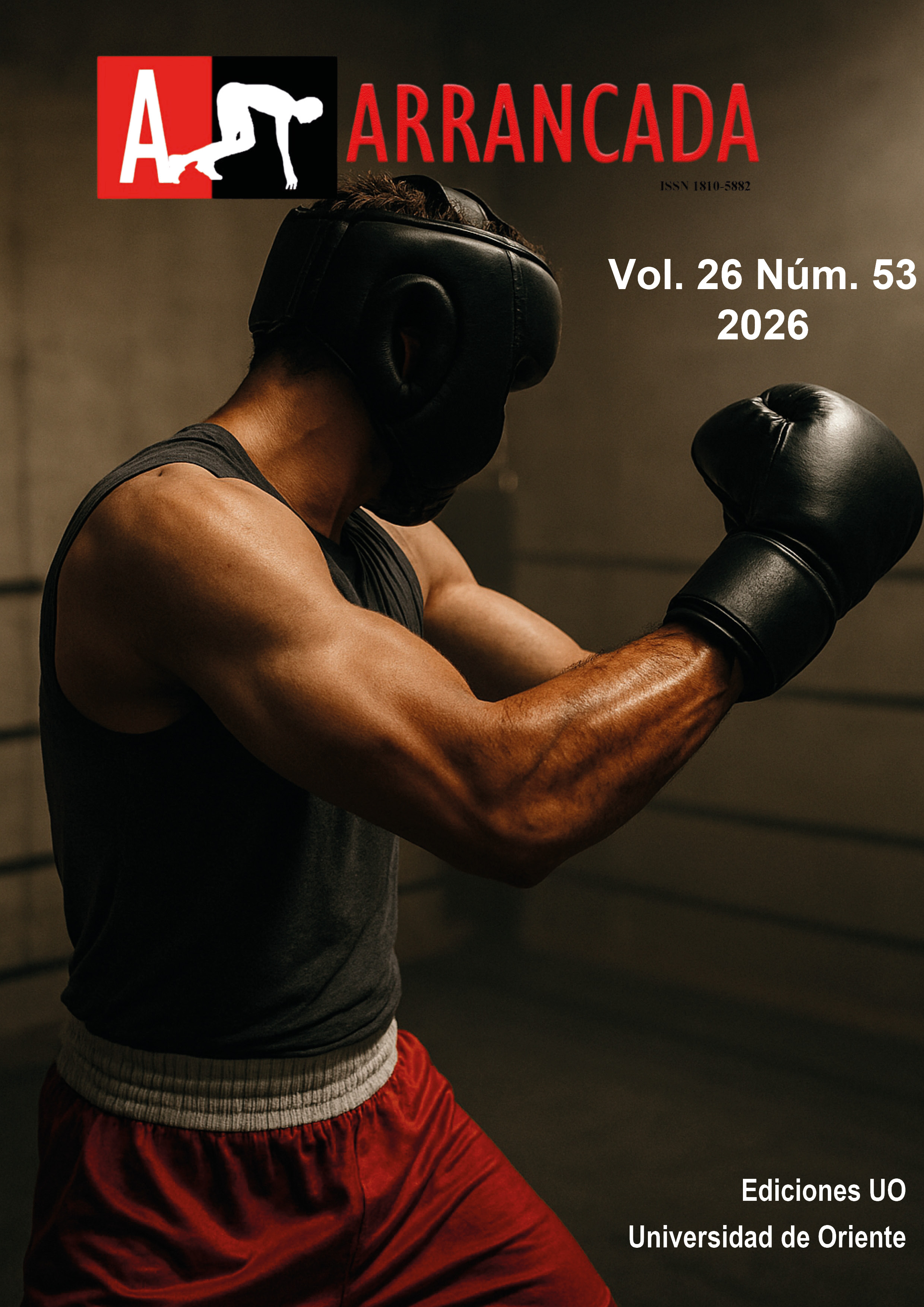
Este estudio investigó los niveles de percepción de autodefensa de mujeres atletas de deportes de combate frente a ataques físicos y exploró posibles diferencias entre disciplinas. La investigación incluyó a un total de 463 mujeres atletas voluntarias (edad media ± desviación estándar = 24.92 ± 8.30 años) con al menos 2 años de experiencia en judo (n = 150), karate (n = 128), taekwondo (n = 49), lucha (n = 54) y kickboxing (n = 82). A las participantes se les administró un «Formulario de Información Personal» y la «Escala de Autodefensa ante Ataques Físicos». Los hallazgos indican que las atletas de nivel nacional obtuvieron puntuaciones más altas en la subdimensión «autodefensa ante ataques físicos simples» (p < .032). Además, las mujeres que practicaban lucha y judo mostraron niveles de percepción significativamente más altos de autodefensa ante ataques físicos simples en comparación con aquellas que practicaban kickboxing (p < .002). Asimismo, una mayor experiencia se asoció positivamente con ambas subdimensiones (r = .207; p < .01 y r = .113; p < .05), mientras que una mayor edad presentó una correlación positiva baja pero significativa únicamente con la subdimensión «autodefensa ante ataques físicos simples» (r = .155; p < .01). Esta investigación puede servir como guía para mujeres interesadas en los deportes de combate con fines de autodefensa física.
Descargas
Citas
Adak, N. (2000). Değişen Toplumda Değişen Aile. Siyasal Yayınevi, Ankara.
Ahn, J. D., Hong, S. H., & Park, Y. K. (2009). The historical and cultural identity of Taekwondo as a traditional Korean martial art. The International Journal of the History of Sport, 26(11), 1716-1734.
Barbado, D., Lopez-Valenciano, A., Juan-Recio, C., Montero-Carretero, C., van Dieën, J. H., & Vera-Garcia, F. J. (2016). Trunk stability, trunk strength and sport performance level in judo. PloS one, 11(5), e0156267.
Bowman, P. (2019). Making martial arts history matter. In Martial Arts in Asia (pp. 35-53). Routledge.
Brecklin, L. R. (2008). Evaluation outcomes of self-defense training for women: A review. Aggression and Violent Behavior, 13(1), 60-76.
Callan, M., & Bradić, S. (2018). Historical development of judo. In The science of judo (pp. 7-13). Routledge.
Chaabene, H., Hachana, Y., Franchini, E., Mkaouer, B., & Chamari, K. (2012). Physical and physiological profile of elite karate athletes. Sports medicine, 42, 829-843.
Cynarski, W. J. (2019). Martial Arts & Combat Sports: Towards the General Theory of Fighting Arts. Gdańsk: Wydawnictwo Naukowe Katedra.
Cynarski, W. J., Pawelec, P., Yu, J. H., Slopecki, J., Bielec, G., & Kubala, K. (2018a). Young people practicing martial arts and their perception of success. Pedagogics, psychology, medical-biological problems of physical training and sports, (5), 231-236.
Cynarski, W. J., Pawelec, P., Yu, J. H., Vit, M., Slopecki, J., Bielec, G., & Kubala, K. (2018b). Perception of success among people practising martial arts and combat sports. Central European journal of sport sciences and medicine, 21(1).
Demirkan, E., Koz, M., Kutlu, M., & Favre, M. (2015). Comparison of physical and physiological profiles in elite and amateur young wrestlers. the Journal of Strength & conditioning research, 29(7), 1876-1883.
Drid, P., Casals, C., Mekic, A., Radjo, I., Stojanovic, M., & Ostojic, S. M. (2015). Fitness and anthropometric profiles of international vs. national judo medalists in half-heavyweight category. The Journal of Strength & Conditioning Research, 29(8), 2115-2121.
Duvvury, N., Callan, A., Carney, P., & Raghavendra, S. (2013). Intimate partner violence: Economic costs and implications for growth and development. Women’s Voice, Agency, & Participation Research Series No.3.
Finkelhor, D., Turner, H., Ormrod, R., Hamby, S. & Kracke, K. (2009). National survey of children’s exposure to violence. Juvenile Justice Bulletin, 1-11.
Franchini, E. (2014). Born to fight? Genetics and combat sports. Revista de Artes Marciales Asiáticas, 9(1).
Franchini, E., Cormack, S., & Takito, M. Y. (2019). Effects of High-Intensity Interval Training on Olympic Combat Sports Athletes’ Performance and Physiological Adaptation: A Systematic Review. The Journal of Strength & Conditioning Research, 33(1), 242-252.
Franchini, E., Del Vecchio, F. B., Matsushigue, K. A., & Artioli, G. G. (2011). Physiological profiles of elite judo athletes. Sports medicine, 41, 147-166.
Garcia-Moreno, C., Jansen, H. A., Ellsberg, M., Heise, L. and Watts, C. H. (2006). Prevalence of intimate partner violence: findings from the WHO multi-country study on women’s health and domestic violence. The Lancet, 368(9543), 1260-1269.
George, D., & Mallery, P. (2019). IBM SPSS statistics 26 step by step: A simple guide and reference. Routledge.
Ghorbanzadehkoshki, B. (2009). Milli Olan ve Olmayan Taekwondocuların Bazı Fiziksel Özelliklerinin İncelenmesi. Yüksek Lisans Tezi, Ankara Üniversitesi, Sağlık Bilimleri Enstitüsü, Ankara.
Ghosh, N., Sengupta, S., Biswas, J., & Chowdhury, A. (2020). Self-empowerment Boosts Confidence: Assessing Experience of Martial Arts Workshop among Undergraduate Students in North Bengal Medical College. Journal of Comprehensive Health, 8(1).
Green, T. A., & Svinth, J. R. (Eds.). (2010). Martial Arts of the World: An Encyclopedia of History and Innovation [2 volumes]. Bloomsbury Publishing USA.
Gümüşay, M. (2022). Savunma ve Dövüş Sporu Yapan Bireylerin Suça Yönelik Tutum ve İlişkilerinin İncelenmesi. Spor & Bilim 2022-II, 247.
Guthrie, S. R. (1997). Defending the self: Martial arts and women’s self-esteem. Women in sport and physical activity journal, 6(1), 1-28.
Higgins, M., Littleton, H., Zamundu, A., & Dolezal, M. (2024). “It Literally Makes Me Feel Harder to Kill”: A Qualitative Study of the Perceived Benefits of Recreational Martial Arts Practice Among Women Sexual Assault Survivors. Sex Roles, 90(9), 1285-1299.
Hollander, J. A. (2018). Women’s self‐defense and sexual assault resistance: The state of the field. Sociology Compass, 12(8), e12597.
Hulteen, R. M., Smith, J. J., Morgan, P. J., Barnett, L. M., Hallal, P. C., Colyvas, K., & Lubans, D. R. (2017). Global participation in sport and leisure-time physical activities: A systematic review and meta-analysis. Preventive medicine, 95, 14-25.
Jennings, L. A. (2021). Mixed martial arts: A history from ancient fighting sports to the UFC. Rowman & Littlefield.
Junior, A. C. T., Junior, J. A. O., Goncalves, B., Drigo, A. J., & Dos-Santos, J. W. (2018). Body composition, strength and specific physical fitness as factors to discriminate performance in judokas. Arch Budo, 14, 117-123.
Kanō, J., Murata, N., & Ross, N. H. (2005). Mind over muscle: Writings from the founder of judo. Kodansha International.
Kearns, N., Coen, L., & Canavan, J. (2008). Domestic violence in Ireland: an overview of national strategic policy and relevant international literature on prevention and intervention initiatives in service provision. Galway: Child and Family Research Centre, NUI Galway.
Ko, Y. J., & Kim, Y. K. (2010). Martial arts participation: Consumer motivation. International Journal of Sports Marketing and Sponsorship, 11(2), 2-20.
Krantz, G., & Garcia-Moreno, C. (2005). Violence against women. Journal of Epidemiology & Community Health, 59(10), 818-821.
Kusnierz, C., Cynarski, W. J., & Gorner, K. (2017). Social reception and understanding of combat sports and martial arts by both school students and adults. Ido Movement for Culture. Journal of Martial Arts Anthropology, 17(1), 30-37.
Lorenço-Lima, L. (2024). The effect of combat sports experience, competition engagement, sex, and age on grit. Journal of Human Sport and Exercise, 19(1), 130-138.
Noel, H. (2009). Un-doing gendered power relations through martial arts?. International Journal of Social Inquiry, 2(2), 17-37.
Scott, H. (2003). Stranger Danger: Explaining Women’s Fear of Crime. Western Criminology Review 4(3), 203-214.
Terry, C. M. (2006). The martial arts. Physical Medicine and Rehabilitation Clinics, 17(3), 645-676.
Torres, J. (2020). Predicting law enforcement confidence in going ‘hands-on’: the impact of martial arts training, use-of-force self-efficacy, motivation, and apprehensiveness. Police Practice and Research, 21(2), 187-203.
Twemlow, S. W., Lerma, B. H., & Twemlow, S. W. (1996). An analysis of students’ reasons for studying martial arts. Perceptual and motor skills, 83(1), 99-103.
UN Women, (2016). The economic costs of violence against women. Recuperado el 20 de marzo de 2025 de https://www.unwomen.org/en/news/stories/2016/9/speech-by-lakshmi-puri-on-economic-costs-of-violence-against-women
Uyar, M. (2022). Kadınlar için Fiziksel Öz Savunma Ölçeğinin Geliştirilmesi. Uluslararası Bozok Spor Bilimleri Dergisi, 3(3), 29-45.
Yıkılmaz, A., Yılmaz, C., Çiçekli, A., Eryılmaz, Ö., Budak, C., Uyar, M., & Şahin, F. N. (2025). Taekwondo exercises for women improve quality of life, physical self-defence skills, and psychological resilience. Frontiers in Psychology, 16, 1638975.
Yılmaz, C., Erail, S., Budak, C., & Demiroglu, T. (2024). Effect of teakwondo training on self-control, quality of life and self-defense levels in sedentary women. Journal of ROL Sport Sciences, 5(3), 508–520.
Yoon, J. (2002). Physiological profiles of elite senior wrestlers. Sports Medicine, 32, 225-233.
Ziegler, R., & Mitchell, D. B. (2003). Aging and fear of crime: An experimental approach to an apparent paradox. Experimental aging research, 29(2), 173-187.
Zivin, G., Hassan, N. R., DePaula, G. F., & Monti, D. A. (2001). An effective approach to violence prevention: Traditional martial arts in middle school. Adolescence, 36(143), 443.
Publicado
Cómo citar
Número
Sección
Licencia
Derechos de autor 2026 Maite Pérez-Muniz; Yunus Emre Susuz, Musa Uyar, Fatih Sülün, Muhammed Sıddık Çemç, Filiz Fatma Çolakoğlu

Esta obra está bajo una licencia internacional Creative Commons Atribución-NoComercial-SinDerivadas 4.0.
Esta revista proporciona un acceso abierto inmediato a su contenido, basado en el principio de que ofrecer al público un acceso libre a las investigaciones ayuda a un mayor intercambio global de conocimiento.
Se aceptan además, trabajos de arbitraje abierto (pre-print), preferentemente desde Research Gate.


